
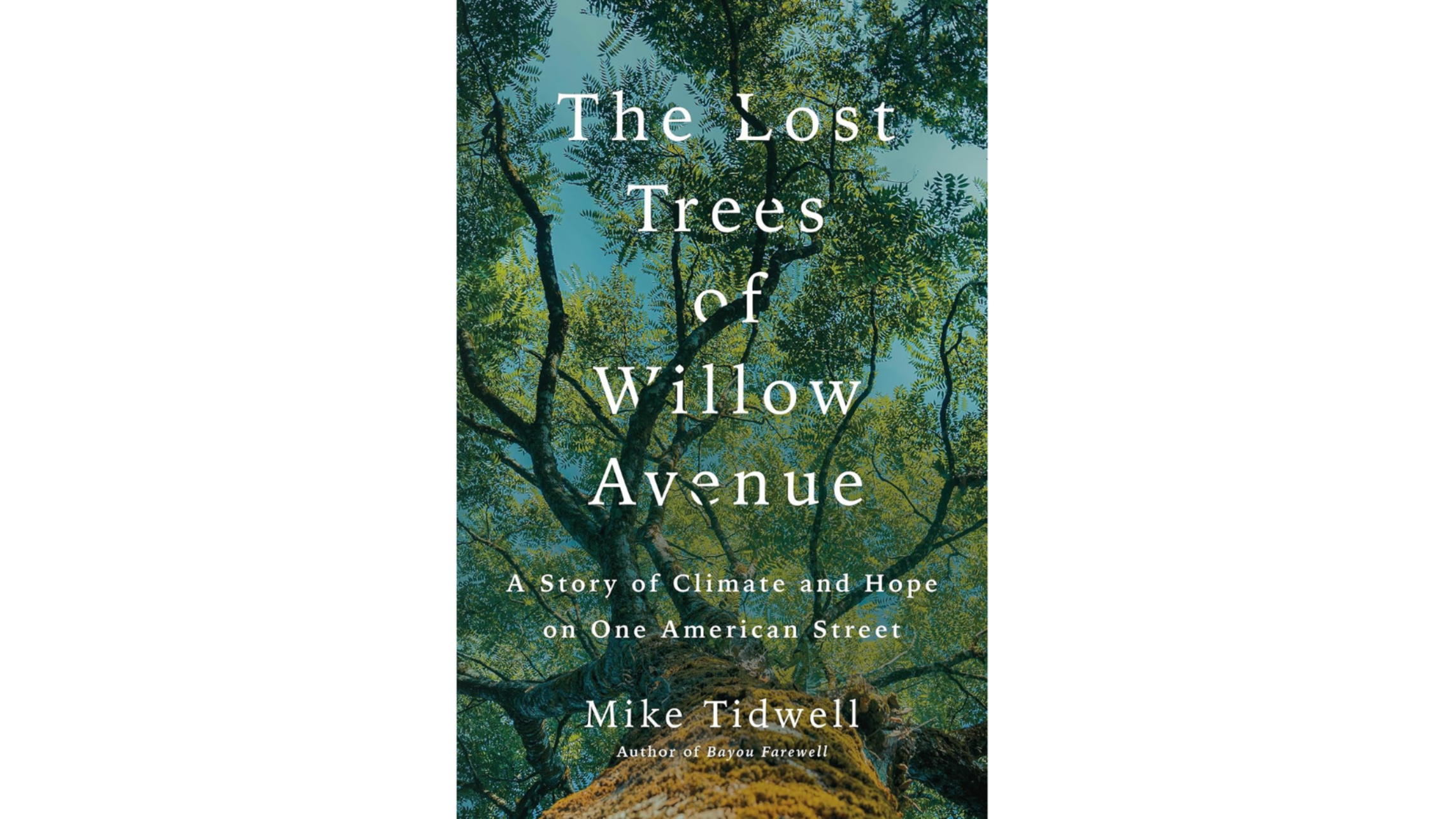
The Lost Trees of Willow Avenue
Reading The Lost Trees of Willow Avenue feels like strolling through your hometown with an affable neighbor, one filled with a deep respect for the natural world and a pragmatic concern for its demise. On one level, Mike Tidwell recounts just a single year, 2023, in a Washington, D.C., suburb whose residents cope with the local effects of global climate change: the tombstone stumps of new-fallen trees, the sudden gaps in rich canopy across which the wind now blows “like human breath over the tops of empty bottles,” the flooding school basement, and the sidewalk berm installed as a countermeasure against rising waters. On another level, though, the narrative follows a much older story that begins with an oak whose acorn took hold in the 1870s and that lived long enough to witness today’s green energy revolution. But that oak serves as Tidwell’s paradigm for how the revolution has come too late: damaged by extreme weather, the oak is removed, disrupting the cooling effect of shade on the street, decreasing carbon absorption, and increasing trapped atmospheric heat. Tidwell’s urgent question is: If green energy is too late to stop extreme weather, how do we speed action along and clean the atmosphere now?... Read more